


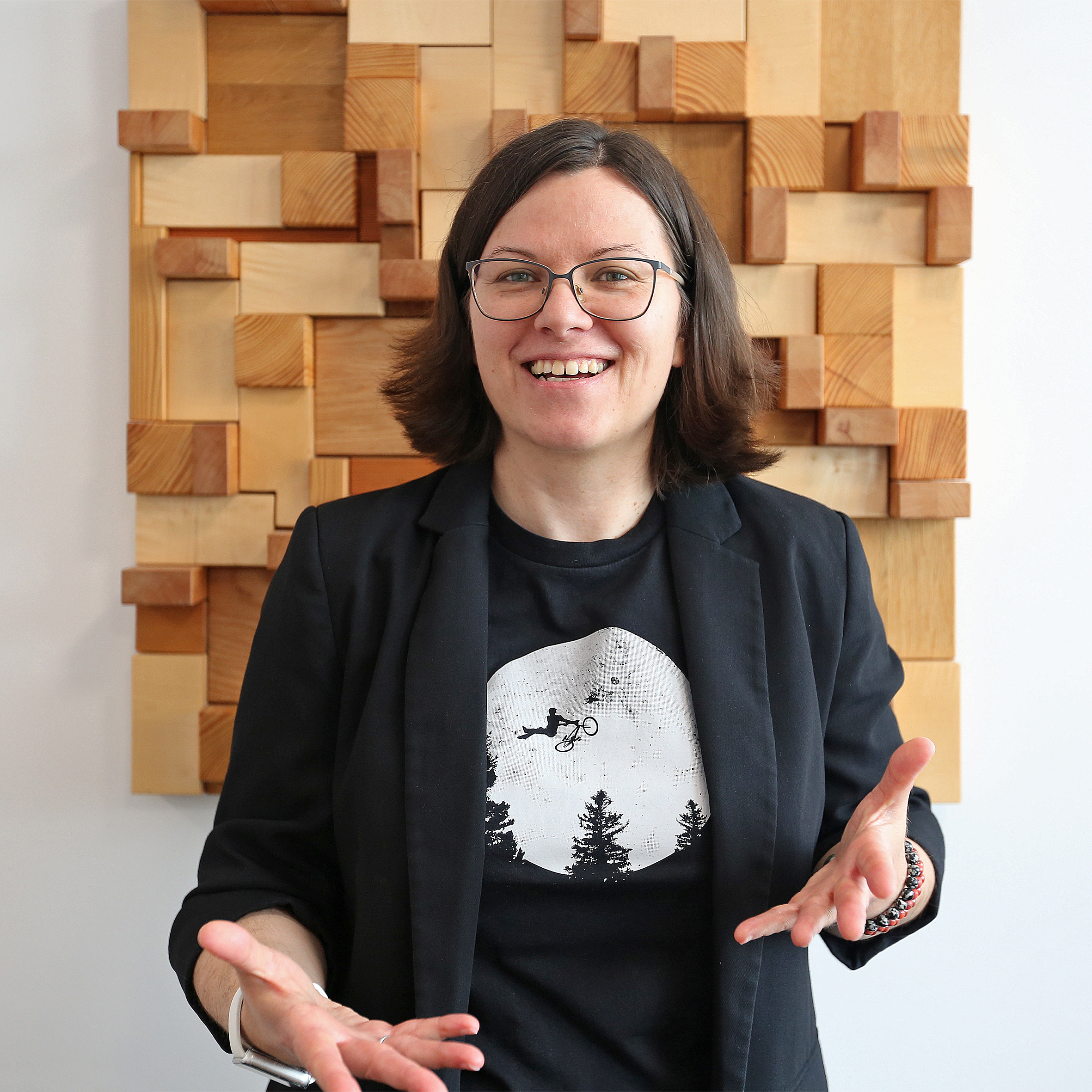
In the world of family business, passing the torch to the next generation is often one of the greatest challenges. At Center za zunanjo ureditev d.o.o., this path was walked thoughtfully and used as a catalyst for a complete transformation of their activities. We spoke with Petra Kos, who officially took over as Director in 2018 from the founder, her father Jože Kos.
Ms. Kos, your company has changed significantly since its founding in 2008. How would you describe this journey?
Petra Kos: Indeed. Our company originally focused on outdoor space planning, engineering consultancy and project coordination. Over the years, under my father Jože's leadership, we began evolving into a hybrid business that now combines engineering expertise, education and tourism. A major turning point was the development of the Lesarius project, an experiential learning museum that opened the doors for us into the world of educational tourism.
In 2018, you formally became the Director. How did the succession process take place?
Petra Kos: It wasn't a single event but a gradual process built on practical experience and increasing responsibility. I learned a great deal by working directly alongside my father, who remains the owner and provides guidance as a mentor. The main challenge was balancing different generational perspectives, which required careful communication and trust.
You mentioned Lesarius. What is this project about and why is it important for the company?
Petra Kos: Lesarius emerged from my father’s interest in sharing knowledge about wood and traditional skills. With EU support, we turned this idea into an interactive tourism attraction. We offer workshops and programs for schools, companies and families. This allowed us to diversify our income and become more resilient to market changes. Today, Lesarius not only preserves technical heritage but also promotes environmental awareness and creativity among visitors.
The transition from specialized consultancy to tourism likely wasn't without its difficulties?
Petra Kos: Definitely not. Transforming a consultancy-focused business into a diversified enterprise brought new challenges regarding staffing, knowledge transfer and future capacity building. We had to strengthen our digital presence and connect more deeply with local tourism stakeholders and other partners. Networking and cooperation are now essential drivers of our innovation.
Based on your experience, what would you advise other family businesses preparing for a generational change?
Petra Kos: My main advice is to plan succession early and treat it as a long-term process rather than a single event. Successors should be involved in daily operations as early as possible to gain practical entrepreneurial experience. Above all, view succession as an opportunity to develop the business and create new value, not just as a transfer of ownership. As I like to say: »A company should be seen as something that can continue and evolve beyond one generation.«.
Find out more: https://www.zunanjaureditev.com/sl/index
https://www.lesarius.si/sl/kako-do-nas
The story of Center za zunanjo ureditev d.o.o. proves that with the right approach to succession, a company can not only survive but, with the fresh ideas of a new generation, flourish in entirely new industries
Author: Jasna Presečki, Development Centre of the Heart of Slovenia