



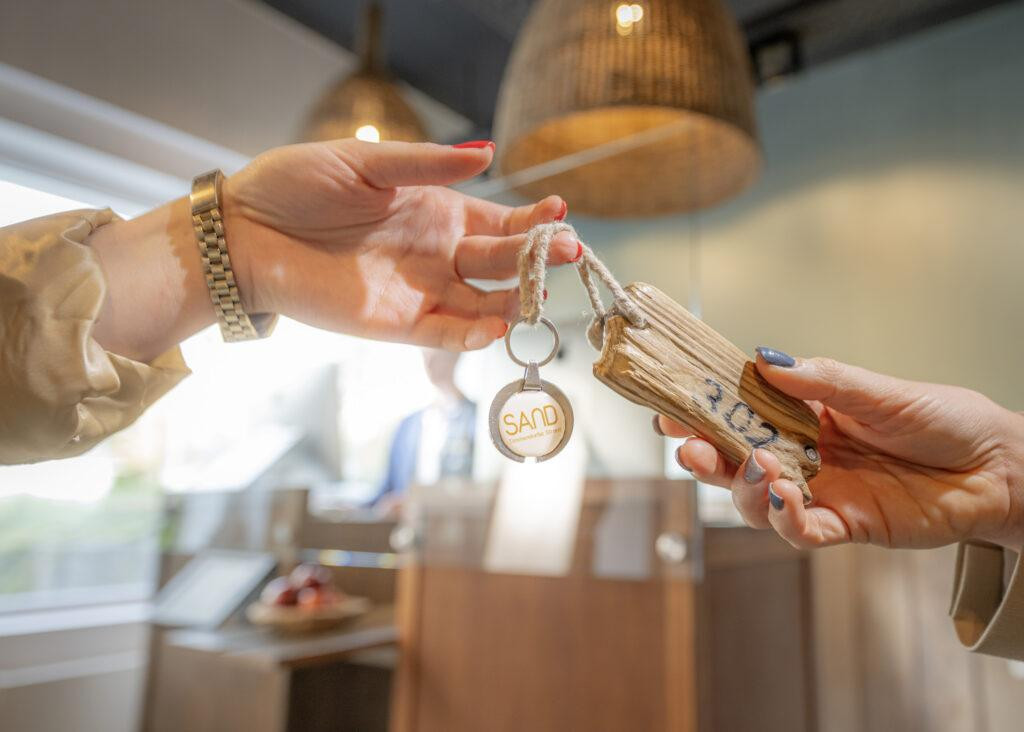
When a family hotel changes hands, attention naturally turns to contracts, tax, financing and property. These matter. But for many family businesses, what is really being handed over is something less tangible: a way of working, a set of values and a relationship with guests, staff, the landscape and the local community. For hotels that have built their identity around sustainability, the question of how those values survive a generational change is especially important.
Green Pearls’ article explores how family-run sustainable hotels in Germany, Austria, Italy and Croatia have approached succession. Their examples show that sustainability can be passed on as a living value, not just a certificate on the wall, and that a new generation can carry it forward while making the business its own.
Family businesses are the backbone of hospitality
According to a 2023 study by the German association Die KMU-Berater, between 75 and 80 per cent of hospitality businesses in Germany are family-run or family-owned. Green Pearls notes that the picture is similar in Austria and South Tyrol. Across much of Europe, the same is true: small, family-run hotels, guesthouses and restaurants make up a large share of the tourism sector. This means generational change affects most of the industry, and how well it is managed shapes the future of many destinations.
Succession is about responsibility
Family businesses tend to plan for the long term and have close personal ties to their companies. As a result, decisions about succession are usually driven by stability and continuity rather than short-term returns. Green Pearls describes succession as an emotional process that needs clarity, preparation and mutual respect.
A central message of the article is balance. The values that have shaped the business should be kept, while the next generation needs room to develop its own identity and ideas. The two should complement each other rather than compete. Green Pearls also stresses that, for sustainable hotels, taking over the business means taking on responsibility, for the business, the team, the environment and the community, rather than pursuing personal ambition.
Sustainability as an inherited value
Green Pearls argues that sustainability is part of a business’s identity and philosophy, not simply a list of measures or a certificate. Values of this kind are often passed on through example rather than instruction. Children who grow up watching their parents work with regional suppliers, use energy and water carefully and look after their staff tend to absorb these behaviours naturally. By the time they take over, sustainability is simply part of how the business is run.
Examples from family hotels across Europe
Green Pearls profiles ten hotels from its network. Their experiences show many different ways of approaching succession.
Hotel Schloss Lerchenhof, Carinthia, Austria. Johann Steinwender grew up at this historic castle hotel and returned after more than ten years working in international tourism. Rather than a sudden handover, he and his wife Karin first leased the business from his parents for two years, from 2023 to 2025, before officially taking it over in July 2025. This transition period was chosen to make the handover structured and transparent, and the relationship between the generations remained respectful throughout.
Naturhotel Outside, Hohe Tauern National Park, East Tyrol, Austria. Daniel Ganzer took over from his parents in 2023. For him, sustainability is a practical priority rather than a campaign: improving efficiency, using energy better, treating resources carefully and building a strong team with deep roots in the region.
Hotel Luise, Erlangen, Germany. Now led by the third generation, Ben Förtsch, this hotel has developed its established values gradually rather than breaking with the past. Family history is visible throughout the building, from a tribute to his father at the entrance to family stories on the menu and historical photographs. Förtsch combines this heritage with circular economy principles, climate-friendly concepts and contemporary design.
Hotel Das Rübezahl, Allgäu, Germany. Founded by Hildegard and Herbert Thurm, the hotel was developed by their children into a well-known romantic retreat. The third generation, represented by Alexander Thurm, is now involved in management. Sustainability and love of nature are described as part of the family’s character, and the new generation’s focus is on communicating these values more visibly rather than changing direction.
Paradiso Pure.Living, Seiser Alm, Dolomites, Italy. Valeria Caldarelli and her husband bought and rebuilt this historic hotel in 1994. Their sons, Alexander and Maximilian Spögler, now run the business. The family’s shared vegan philosophy, lived by every generation, made the transition easier, and the foundations for the next succession are already in place.
My Arbor, Brixen, South Tyrol, Italy. Alexandra Huber and her family are partway through a gradual handover, with parents and children working closely together. For Huber, tradition provides guidance, but openness to new ideas is essential, and sustainability is a long-term commitment that extends to the generations still to come.
Relais del Maro, Borgomaro, Liguria, Italy. Elena Scalambrin and her mother Piera run this hotel, whose family roots in the village go back generations. In 2012 the family renovated several historic houses into an Albergo Diffuso, a hotel spread across a village, preserving their property and helping to revive the community. Tradition is combined with modern comfort and a personal welcome.
Hotel Korinjak, Iž island, Croatia. For this family-run island hotel, succession is about passing on a philosophy rather than a property. The next generation takes part in daily operations and learns the reasoning behind decisions, while bringing new perspectives. Careful use of water and energy, thoughtful food sourcing and respect for a sensitive island environment are values intended to outlast any one person.
SANDcollection, Baltic and North Sea coasts, Germany. Managing Director Marion Müller has set out the company’s ecological, economic and social sustainability criteria in a written document, the “SANDspirit”, which is developed and reviewed together with the team. She emphasises early, long-term transition planning, involving both external experts and the family.
Summit Lodges, Pfunds, Austria. Built in 2018 on land held by the family for generations, these lodges were designed with resource-efficient construction in mind. The family sees sustainability across generations, and the children learn responsibility and entrepreneurial thinking from an early age.
Lessons for tourism businesses
These examples point to several practical lessons for any tourism business preparing for succession, whether or not sustainability is its main focus.
Plan a transition period. Schloss Lerchenhof’s two-year lease before full transfer shows how a structured, gradual handover can give both generations time to adjust. Lease arrangements, shared management periods or phased transfers of responsibility can all reduce risk and build confidence.
Gain experience elsewhere. Johann Steinwender spent over a decade in international tourism before returning to the family business. Experience outside the family business brings new skills, credibility with staff and fresh ideas.
Write values down. SANDcollection’s written sustainability criteria show how values can be made explicit and shared with the team. A written statement of what the business stands for helps a successor understand what to protect, and helps staff see that the business’s identity will continue.
Involve the next generation early. At Hotel Korinjak and My Arbor, the next generation takes part in the business before taking over and learns why decisions are made, not just what is done. Understanding the reasoning behind practices makes it easier to keep the right things and change the rest.
Use heritage as a strength. Hotel Luise and Relais del Maro show how family history can become part of the guest experience and the brand. Stories, photographs and traditions can help guests feel that the business remains the same at heart, even as it evolves.
Combine continuity with change. Almost every example balances respect for what came before with openness to new ideas, whether through new design, better use of energy, digital communication or a stronger focus on sharing values with guests.
Succession as an ongoing process
Green Pearls describes succession as an “endless game” of generations: an ongoing process built on trust and long-term thinking, rather than a single event. When sustainability is both a strategy and an attitude, it can be passed on through consistency, innovation and a shared sense of responsibility. Succession then becomes a deliberate choice to hand on values and care for future generations, so that sustainability becomes a lasting legacy rather than a passing trend.
Further support from NextGEN Tourism
The NextGEN Tourism training modules explore these themes in depth. Module 2, Ensuring the Business Is Transfer Ready, covers strategic direction, sustainability and business renewal. Module 5, Family, Teams and Stakeholder Relationships, covers communication, trust and the transfer of experience between generations. Module 7, Keeping Customers and Growing the Business, covers brand continuity and customer relationships after the handover. The Tourism Succession Readiness Assessment helps owners and successors identify where to begin.

Source: Green Pearls, “Business succession in hotels: Ensuring sustainability across generations”, Green Pearls Newsroom, 22 April 2026.
This article is based on “Business succession in hotels: Ensuring sustainability across generations”, published by Green Pearls on 22 April 2026. Green Pearls is a collection of sustainable hotels and destinations, based in Darmstadt, Germany. The examples and insights from their article have been summarised and adapted for tourism businesses across Europe by the NextGEN Tourism partnership. The original article is available at greenpearls.com.